
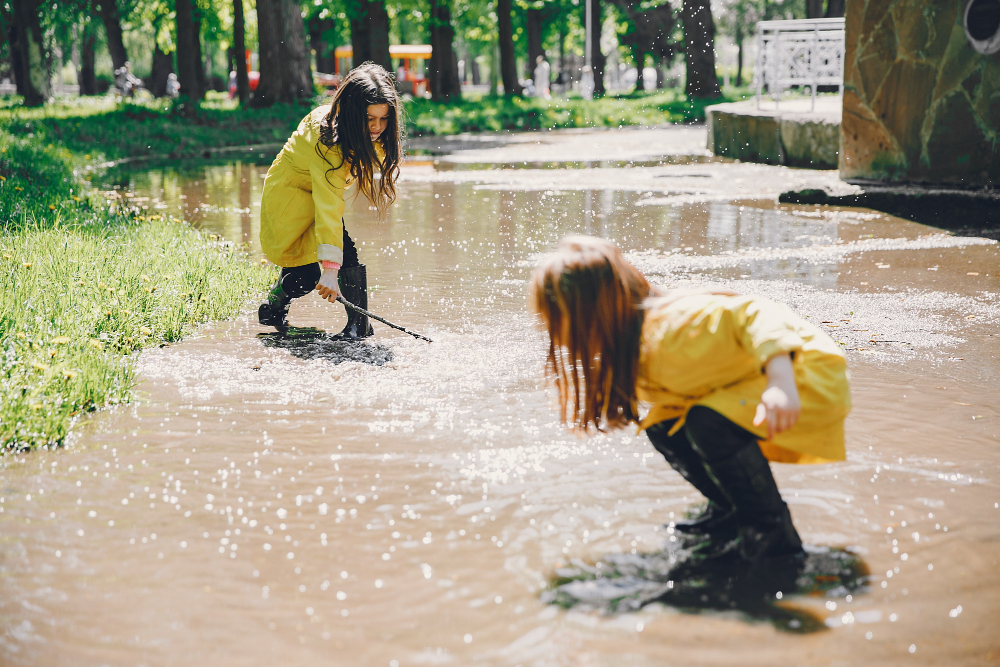
Overview: Why Children Love Playing in Rainwater
Many children feel excited when it rains. They love to splash in puddles and run through the water. For them, playing in rainwater is fun and feels like an adventure. Often, parents remember their own childhood days and let their kids join in. However, it is important to know about playing in rainwater health risks for children. While rain play can seem harmless, it can expose kids to hidden dangers.
Common Health Risks
Although rainwater looks clean, it can carry germs and chemicals. These can cause health problems, especially for children. For example, water on the ground may mix with dirt, animal waste, or trash. This can lead to several risks, such as:
Additionally, children with cuts or wounds are at higher risk. Germs can enter the body through broken skin.
Symptoms to Watch For
After playing in rainwater, children may show signs of illness. Therefore, parents should watch for these symptoms:
Sometimes, symptoms appear a few days later. If your child feels unwell after rain play, seek medical advice.
How Doctors Diagnose Rainwater-Related Illnesses
Doctors ask about your child’s recent activities, including playing in rainwater. Next, they check for symptoms and may do a physical exam. In some cases, doctors order tests, such as:
Early diagnosis helps prevent serious health problems. Therefore, always share details about rainwater exposure with your doctor.
Treatment Options and Home Care
Treatment depends on the illness. For mild symptoms, doctors may suggest rest and fluids. However, some cases need medicine, such as antibiotics or creams for skin infections. At home, you can help your child by:
If symptoms do not improve, return to the doctor. Quick care can prevent complications.
Prevention Tips for Parents
Parents can take steps to keep children safe during the rainy season. For example:
Additionally, keep an eye on local health alerts about waterborne diseases in children.
Safe Alternatives to Playing in Rainwater
Instead of playing in rainwater, children can enjoy safe indoor activities. For instance, you can:
These options keep children entertained and safe from rainwater health risks.
In summary, playing in rainwater may seem fun, but it can lead to health problems for children. Always watch for symptoms and take steps to prevent illness. If your child develops any symptoms after playing in rainwater, consult Dr. Brundha Reddy at Arkaa Clinics for timely pediatric evaluation and personalized care.